How AI Is Transforming Logistics Audits: From Intuition to Informed Decisions in Hours
Transportation and logistics companies lose an average of 15 to 25% of their operating budget due to suboptimal route planning, insufficient load factors, and poorly allocated costs. The problem? These inefficiencies are often invisible, buried in scattered Excel spreadsheets that no one has time to analyze. Opsivia changes the game.
The Reality: Rich, Yet Untapped Data
Every transport company generates substantial volumes of data daily: shipment histories, carrier invoices, fuel consumption logs, driver data, and route plans. Yet, most of this information remains siloed in isolated files, rarely cross-referenced, and never systematically analyzed.
The result is flying blind: decisions rely on experience and intuition rather than consolidated facts.
The Opsivia Method: A Structured, AI-Augmented Diagnostic
Opsivia offers a 4-step approach that transforms raw data into actionable recommendations:
1. Strategic Diagnostic Questionnaire A structured 5-part questionnaire—strategic identity, network configuration, operational specifics, technological maturity, and key pain points—quickly maps the company's operational context. In under 15 minutes, a complete profile is established.
2. Intelligent Data Hub The company imports its operational files (shipments, fleet, costs, invoices, routes, fuel, HR, customer database). The platform guides users with a documentation checklist to ensure comprehensive analytical coverage.
3. AI Analysis by Business Domain Each file is individually analyzed by artificial intelligence specialized in logistics. The AI does not just read data structures: it extracts business meaning—main freight corridors, cost anomalies, vehicles due for replacement, seasonal peaks, and potential overbilling.
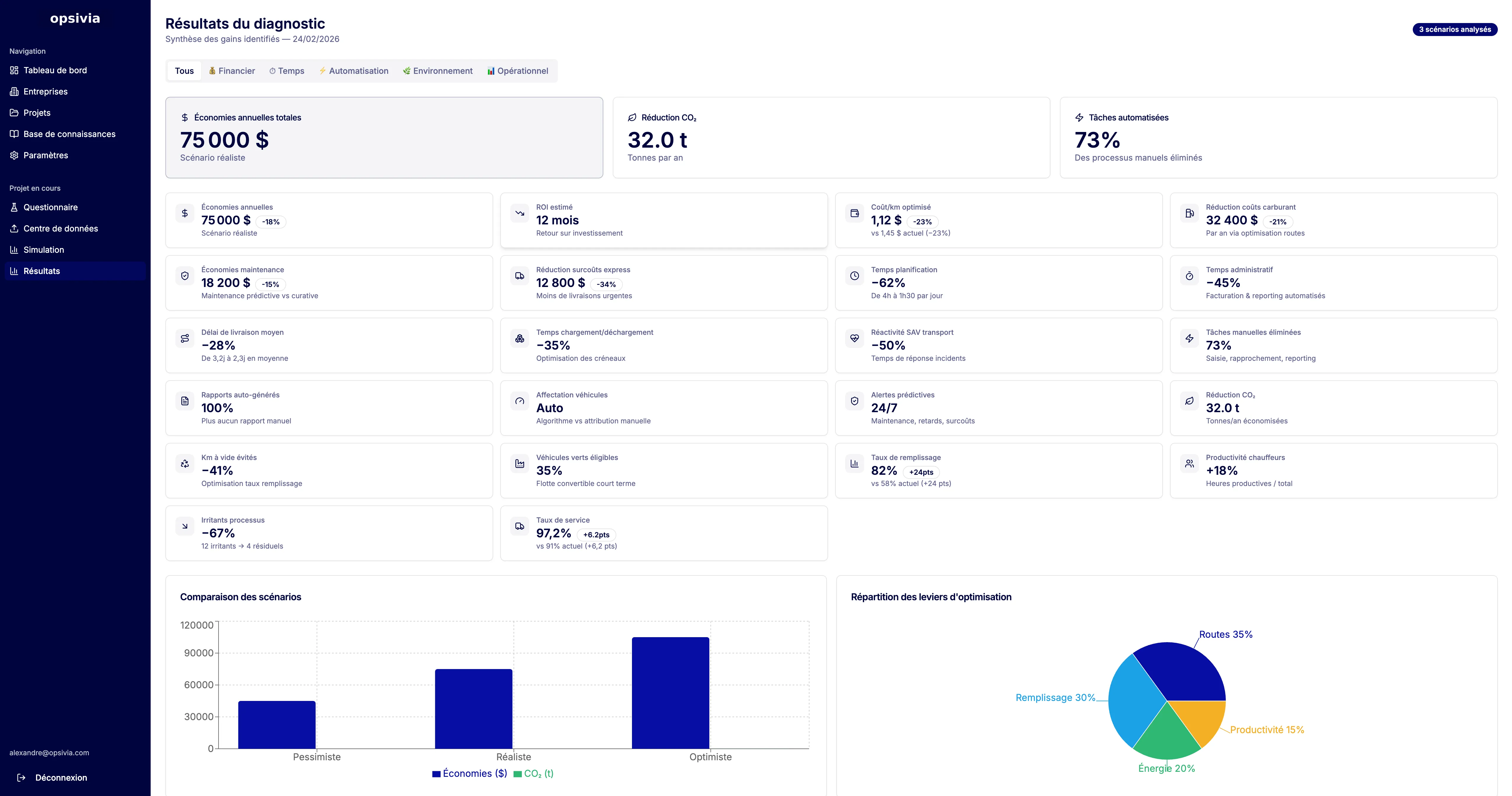
4. Executive Summary Report and Simulation A professional report is automatically generated, cross-referencing questionnaire answers with file analyses. A simulation lab then models the impact of various optimization levers (load factor, energy transition, route optimization) across three scenarios: pessimistic, realistic, and optimistic.
The Tangible Benefits of This Approach
-
Speed: A comprehensive diagnostic in a few hours instead of several weeks of traditional consulting.
-
Objectivity: The analysis is based on the company's real data, not generic benchmarks.
-
Comprehensiveness: 8 business domains covered simultaneously (shipments, fleet, costs, invoices, routes, fuel, HR, customers).
-
Accessibility: No data science skills required on the client side—simply import Excel or CSV files.
-
Actionable: The report distinguishes quick wins from medium-term strategic priorities, providing domain-specific recommendations.
Key Metrics Extracted Automatically
As an example, here are the types of KPIs that the platform extracts and consolidates:
| Domain | Example KPIs |
|---|---|
| Shipments | Total volume, average weight, top 5 corridors, seasonality |
| Fleet | Size, average age, vehicles to replace, utilization rate |
| Costs | Total cost, breakdown by category, cost/km, monthly trend |
| Fuel | Consumption L/100km, high-consumption vehicles, total cost |
| Routes | Average distance/round, load factor, recurring routes |
| HR | Headcount, seniority, driving hours, certification rate |
Simulation: Quantifying Impact Before Investing
The built-in simulation lab models potential gains by adjusting 4 levers:
-
Vehicle load factors
-
Transition to clean energy
-
Driver productivity
-
Route optimization
Each simulation generates three quantified scenarios detailing expected savings (in euros), CO₂ reduction (in tons), and payback period (in months).
Who Is It For?
Opsivia is designed for Logistics Directors, Transport Managers, and Chief Operating Officers looking to:
-
Base investment decisions on objective data
-
Quickly identify savings opportunities
-
Prepare carrier tenders on solid ground
-
Meet CSR requirements with concrete carbon footprint reduction data
Want to know how much your fleet could save?
Request your diagnostic and receive your personalized analysis report.